Sash Window Repair vs. Replace: Costs, Consent, and Conservation

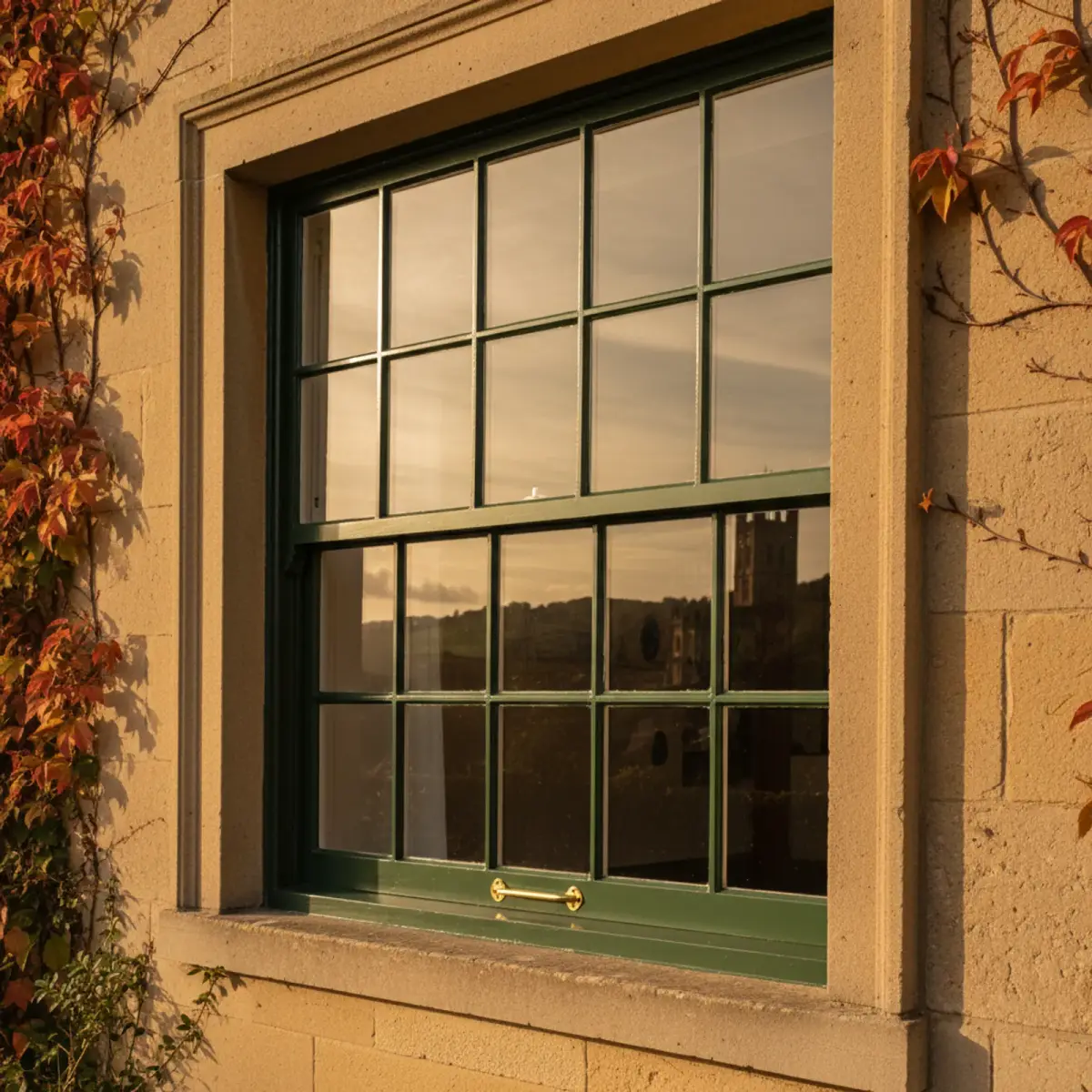
A skilled joiner can repair a rotten sash window for £300–£800. A bespoke replacement costs £1,500–£4,000. In a listed building, fitting the wrong replacement without consent is a criminal offence — not a planning disagreement. The court can order the originals reinstated at your cost.
Most homeowners do not know repair is an option. The window industry has little incentive to explain it.
Repair vs. Replace: The Cost Breakdown
| Option | Estimated Cost (Per Window) | Lifespan Impact | Planning Requirement |
|---|---|---|---|
| Professional Repair | £300 – £800 | +15–25 Years | Rarely Required |
| Secondary Glazing | £400 – £1,200 | Permanent Add-on | Rarely Required |
| Slim-Profile Upgrade | £800 – £1,800 | +20 Years | Often Required |
| Bespoke Replacement | £1,500 – £4,000 | 60+ Years | Always Required |
The Legal Trap: Listed Building Consent
In a conservation area, Permitted Development rights are often withdrawn. Replace original timber sashes with uPVC “mock sashes” without Listed Building Consent and you are not simply making a poor aesthetic choice — you are committing a criminal offence. Local councils can, and do, force homeowners to remove non-compliant windows and reinstate the originals at their own cost.
The safest route is almost always repair. Treating rot with resin and replacing individual decayed sections of the frame preserves the historic fabric and avoids the complexity of a full planning application.
That said, not all sash windows are worth saving. If frames have been heavily modified with hardboard inlays, non-original glass, or concrete sills, the heritage value may be negligible. In those cases, a faithful timber replica may be the better path — still requiring Listed Building Consent, but with a higher chance of approval.
Specialist Solutions: Ventrolla vs. Mighton vs. Bespoke
When the frames are beyond repair, three main paths exist:
-
The Component Route (e.g., Mighton): If the frame is sound but the hardware is failing, fitting high-quality brass catches and weights from specialists like Mighton is the most cost-effective way to restore functionality. Mighton’s catalogue covers draught seals, pulleys, cords, and weights — all designed to retrofit into existing sash boxes without major joinery.
-
The Semi-Bespoke Route (e.g., Ventrolla): For those who want the look of a sash with the efficiency of modern glazing, semi-bespoke systems offer a middle ground on price and lead time. Ventrolla’s Proflex system inserts a discreet secondary seal within the existing frame, improving draughtproofing without changing the external appearance.
-
The Master Joiner Route: Bespoke, hand-crafted timber sashes are the only way to guarantee a true match for high-value heritage properties. This is the most expensive option but gives the greatest uplift to asset value.
Detailed Repair Techniques: What Can Be Saved
Before committing to replacement, it helps to know what a skilled joiner can achieve through repair alone:
- Spliced repairs: Rotten sections of the sash rail or sill can be cut out and replaced with new timber — a “dutchman” repair. This retains most of the original wood and is typically invisible once painted.
- Epoxy resin consolidation: Small pockets of decay can be stabilised with epoxy resin rather than cut out. It is cheaper than splicing and equally effective for localised rot.
- Draughtproofing brushes: Fitting nylon brush seals into the parting beads and staff beads removes the rattle and draught of traditional sashes. The cost is roughly £150–£250 per window and can cut heat loss by up to 35%.
- Cord and weight replacement: Frayed cords and misaligned weights are the most common reason sash windows will not stay open. Replacing the cords with nylon-braided sash cord and rebalancing the weights is a routine repair costing £100–£200.
The Cost of Getting It Wrong
Installing non-compliant windows in a listed building is not a civil matter — it is a criminal offence under the Planning (Listed Buildings and Conservation Areas) Act 1990. Penalties can include:
- An unlimited fine in the Crown Court.
- An Enforcement Notice requiring removal of the non-compliant windows and reinstatement of the originals at the homeowner’s cost.
- A note on the property’s title register that can block a sale until resolved.
If you are buying a listed property, ask your solicitor to check for outstanding enforcement notices or unauthorised alterations to the windows. This is a standard part of conveyancing for listed buildings but is often skipped.
Regional Cost Variations
Repair and replacement costs vary across the UK:
- London and South East: Expect to pay 15–25% above national averages. Heritage joiners in London command premium rates, and the planning process through London boroughs tends to be slower.
- South West and Cotswolds: Dense concentrations of listed buildings create a competitive market for heritage joiners, keeping prices moderate — but lead times of 8–16 weeks are common.
- North of England and Scotland: Lower labour rates reduce costs for both repair and replacement. The pool of specialist heritage joiners is smaller, though, so securing availability in rural areas can take time.
- Wales: Generally the most affordable region for sash window work, but travel costs for specialists from Bristol or the English borders can offset some of the saving.
What most guides miss: The Breathability Conflict
A common mistake in sash window upgrades is over-sealing. Historic buildings were designed to breathe. Fit ultra-tight modern double glazing into a 200-year-old wall and you shift the dew point, causing interstitial condensation. That does not only rot the new frames — it can produce structural damp in the surrounding masonry.
For a deep retrofit, our Passivhaus spec guide covers how to balance high-performance glazing with the moisture needs of old buildings. If outdated glazing is contributing to an Unmortgageable status, a repair-and-secondary-glaze approach is often the quickest way to restore mortgageability without triggering a full and expensive planning battle.
Final Recommendation
- Listed/Grade II: Repair first, secondary glazing second, slim-profile double glazing third.
- Conservation Area: Repair first, bespoke timber second.
- Modern Home: Full replacement with aluminium or uPVC gives the best return.
Back to all cost guides or home.