uPVC vs Timber vs Aluminium: Window Cost and Lifespan Comparison

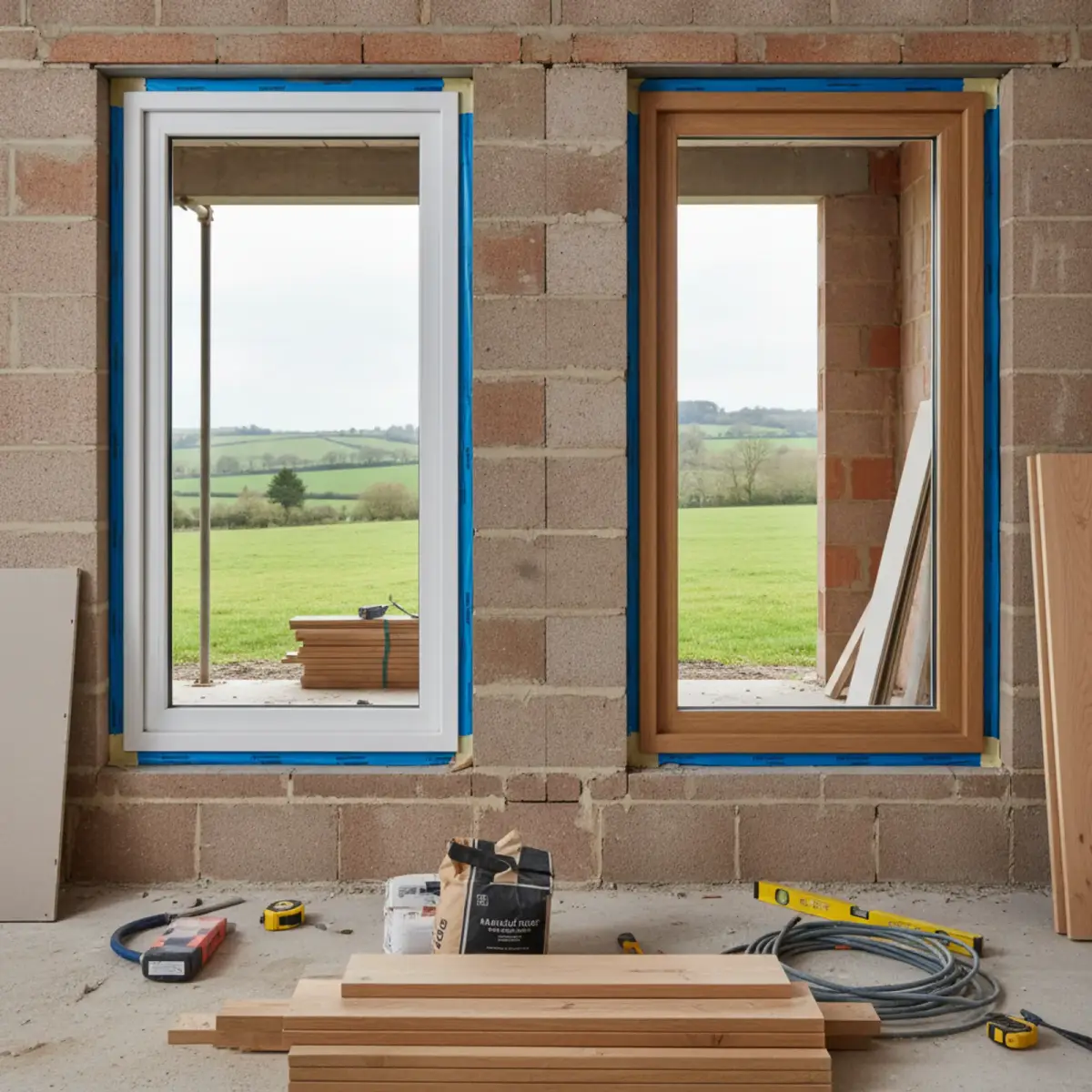
Over 60 years — the lifespan of a well-maintained timber window — aluminium is often cheaper than uPVC. Nobody’s installer will tell you that.
uPVC starts at £600 to £1,200 per unit. Bespoke timber from a specialist like Mumford & Wood exceeds £3,500. The gap looks decisive until you account for three rounds of uPVC replacement, five paint cycles on the timber, and the fact that aluminium needs neither.
Cost vs. Longevity Matrix
| Material | Initial Cost | Expected Lifespan | Maintenance Effort | Yearly Avg. Cost |
|---|---|---|---|---|
| uPVC | Low (£) | 20–30 Years | Very Low | Negligible |
| Aluminium | Mid-High (££) | 45+ Years | Very Low | Negligible |
| Timber | High (£££) | 30–60+ Years | High | £20–£50/yr (Paint/Seal) |
The uPVC Equation: Low Entry, Fixed Exit
uPVC leads UK sales because it is the most direct route to an A-rated home. Systems like Liniar’s lead-free profiles deliver strong thermal breaks and WER A++ ratings without the premium price tag.
That said, uPVC has a hard ceiling on its lifespan. Once seals fail or frames warp after 25 years, repair is not usually an option — the entire unit needs replacing. In financial terms, uPVC is broadly a 20-year instrument.
The Timber Investment: Heritage and Carbon
Bespoke hardwood suits those who put architectural integrity first. Mumford & Wood frames are built to last 60+ years, roughly doubling or tripling the lifecycle of uPVC.
On sustainability, timber is the only frame material with negative embodied carbon when responsibly sourced. The catch is maintenance: ignore the painting and sealing every 5–7 years and hardwood will rot, turning a long-term investment into a liability.
Aluminium: The Modern Middle Ground
Aluminium sits between the two: slim sightlines like timber, maintenance demands like uPVC. Modern thermal breaks — a plastic bridge that stops heat escaping through the metal frame — have made aluminium competitive on thermal performance, though it typically sits just behind the highest-spec uPVC profiles.
The Full Cost Cycle: A 60-Year Comparison
Upfront costs alone are a poor guide. Here is what each material costs over 60 years — the lifespan of a well-maintained timber window:
- uPVC: £600 initial × 3 replacements (every 20–25 years) = £1,800–£2,400. No maintenance costs. Total: approximately £1,800–£2,400.
- Aluminium: £1,500 initial × 1 replacement (at 45+ years, some systems last longer) = £1,500. Negligible maintenance (wipe down annually). Total: approximately £1,500–£2,000.
- Timber: £3,000 initial + £250–£500 maintenance every 5–7 years over 60 years (4–5 repaint cycles at £250–£500 each) = approximately £4,000–£5,500. One replacement is unlikely if maintained properly.
On a whole-life basis, aluminium is often the cheapest option, timber the most expensive, and uPVC somewhere in between. The “cheap” reputation of uPVC is a function of the upfront cost only.
Carbon and Environmental Impact
The sustainability picture matters to more homeowners than it did a decade ago:
- uPVC: Made from PVC (a petroleum-derived plastic). It is difficult to recycle at end of life, and most uPVC windows end up in landfill. Lead-free formulations (such as Liniar’s) are now standard, but the material’s environmental record remains weak.
- Aluminium: Infinitely recyclable without quality loss. Initial production is energy-intensive, but recycled aluminium uses only 5% of the energy of primary production. Over a 40+ year lifespan, the annual environmental cost is very low.
- Timber: The only truly carbon-negative material at manufacture. Responsibly sourced timber (FSC or PEFC certified) locks up more carbon than its processing emits. The maintenance cycle — paint, preservatives — carries an environmental cost that should be counted.
Regional Price Variations
Window pricing across the UK shows significant regional variation:
| Region | uPVC (per window) | Aluminium (per window) | Timber (per window) |
|---|---|---|---|
| London & South East | £650–£1,400 | £1,200–£2,500 | £1,800–£4,500 |
| South West | £550–£1,200 | £1,100–£2,200 | £1,600–£3,800 |
| Midlands | £500–£1,100 | £1,000–£2,000 | £1,500–£3,500 |
| North of England | £450–£1,000 | £950–£1,900 | £1,400–£3,200 |
| Wales | £450–£950 | £900–£1,800 | £1,300–£3,000 |
| Scotland | £500–£1,050 | £950–£1,900 | £1,400–£3,300 |
These figures cover supply and installation of a standard 1200x1000mm casement window. Larger windows, unusual shapes, and heritage profiles will attract premiums of 20–50%.
Common Mistakes to Avoid
- Choosing uPVC for a period property: Even if a conservation officer allows it (which is rare), uPVC on a Victorian or Edwardian terrace looks out of place and can reduce kerb appeal and market value.
- Assuming timber is always better: Poorly maintained timber is worse than uPVC. A rotting frame neglected for a decade costs more to repair than a full unit replacement.
- Specifying aluminium without thermal breaks: Non-thermally-broken aluminium windows still appear at the budget end of the market. They conduct cold straight into the home and fail current Building Regulations.
- Forgetting the hardware: Locks, hinges, and handles are the first components to fail on any window. Specify quality hardware — PAS 24 compliant for security — regardless of the frame material.
- Ignoring guarantees: Reputable manufacturers offer 10-year (uPVC) or 20-year (aluminium/timber) guarantees. If the quote does not include a written guarantee, go elsewhere.
A Practical Decision Framework
Here is how the choice typically falls by common UK property type:
- 1930s semi-detached, standard suburb: uPVC casements. Cost-effective, thermally efficient, and in keeping with the area. Budget £3,000–£5,000 for a full house replacement.
- Victorian terrace, conservation area: Timber sashes or secondary glazing. uPVC mock sashes are almost never acceptable. Budget £8,000–£15,000 for full timber replacement, or £3,000–£6,000 for secondary glazing.
- Modern new-build or extension: Aluminium casements or bifolds. Slim sightlines complement contemporary architecture. Budget £5,000–£10,000 depending on the number and size of openings.
- Grade II listed cottage: Repair first, secondary glaze second, slim-profile double glazing only as a last resort with Listed Building Consent. Budget £1,000–£2,000 per window for repair and secondary glazing.
Frequently Asked Questions
How do I check if my existing uPVC windows are failing? The most common signs are: yellowing or discolouration of the frames, condensation between the panes (indicating seal failure), difficulty opening or closing the sashes, and draughts around the frame. If you see two or more of these signs, the windows are approaching the end of their useful life.
Can I paint uPVC windows? Technically yes, with specialist uPVC paint, but the result rarely looks as good as new uPVC and the paint will peel after 3–5 years. If the appearance has deteriorated to the point where painting is being considered, replacement is usually more cost-effective.
Is aluminium more sustainable than uPVC? Yes. Aluminium is infinitely recyclable without loss of quality, and the recycling infrastructure is well-established in the UK. uPVC recycling is limited, and most end-of-life uPVC windows end up in landfill. On a cradle-to-grave basis, aluminium has a lower environmental impact despite its higher initial energy cost.
What most guides miss: The “Material Mismatch”
Most homeowners shop on frame material but overlook the glazing. You can fit triple-pane, krypton-filled glass into a cheap uPVC frame, but the frame remains the thermal weak point.
Real efficiency comes from matching the system. For anyone targeting the Passivhaus standard, the frame must be rated for the weight and thermal load of triple glazing without bowing. Our Passivhaus window specifications covers how to pair frame and glass for a U-value of ≤ 0.80.
For properties that are currently Unmortgageable because of outdated 1980s uPVC installs, switching to a quality aluminium or timber system can lift the asset’s valuation and restore mortgageability.
Summary: Which Should You Choose?
- uPVC: Suits renters, budget-conscious owners, or anyone who wants immediate thermal gains with minimal fuss.
- Aluminium: Suits modern extensions, large bifolds, and those who want a low-maintenance solution for 40 years.
- Timber: Suits heritage properties, conservation areas, and those planning to stay in the home for 30+ years.
Back to all cost guides or home.